
Getting into a car accident—or dealing with vehicle damage—can be stressful, confusing, and overwhelming. Even if the incident is minor, most drivers aren’t entirely sure how to file an auto insurance claim, what information they need, or what mistakes to avoid.
This guide breaks down the entire auto insurance claims process step by step, so you know exactly what to do, when to do it, and how to protect yourself financially.
Whether it’s a fender bender, a hit-and-run, theft, vandalism, or weather damage—this guide has you covered.
What Is an Auto Insurance Claim?
An auto insurance claim is a formal request you submit to your insurance company asking them to cover damages or losses under your policy.
You may file a claim for:
- Vehicle repairs
- Medical expenses
- Property damage
- Theft or vandalism
- Total loss compensation
The process is regulated at the state level, but the general steps are similar across most insurers, as outlined by the Insurance Information Institute and the National Association of Insurance Commissioners.
When Should You File an Auto Insurance Claim?
You should strongly consider filing a claim if:
- There are injuries (even minor ones)
- Damage repair costs exceed your deductible
- Another party is involved
- Your vehicle is stolen or vandalized
- There is significant property damage
You might not want to file a claim if:
- Damage is minimal and cheaper than your deductible
- No other party is involved
- You’re concerned about future premium increases
👉 Many insurers—including GEICO and State Farm—allow you to request a damage estimate without filing a formal claim, which can help you decide.
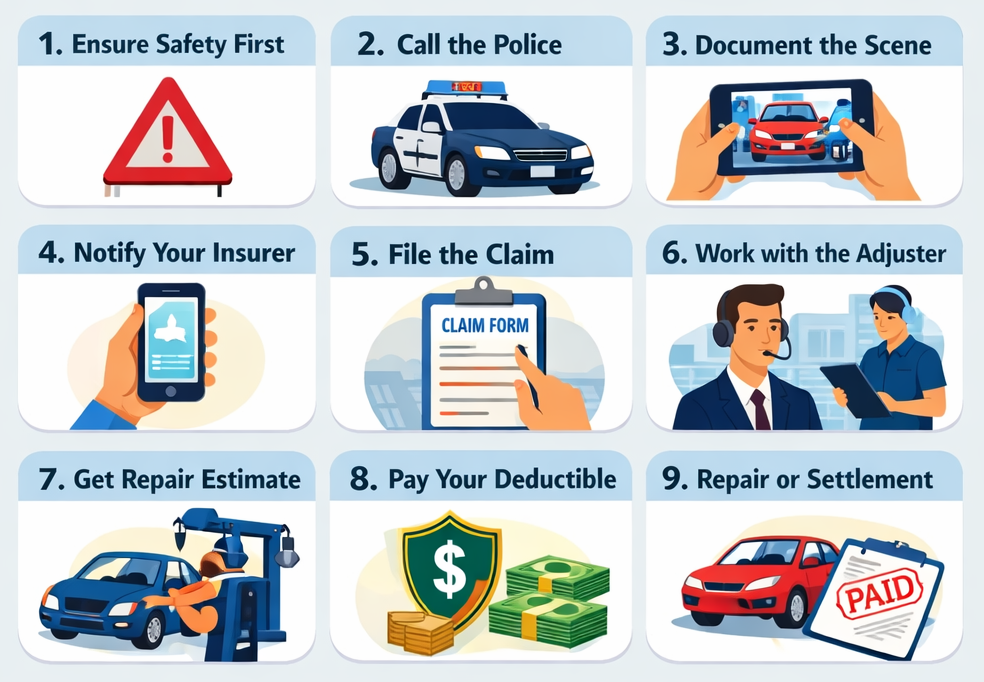
Step-by-Step: How to File an Auto Insurance Claim
Step 1: Ensure Safety First
Before thinking about insurance:
- Move to a safe location if possible
- Check for injuries
- Call emergency services if needed
Even minor accidents can escalate quickly, so safety always comes first.
Step 2: Call the Police (When Appropriate)
You should call the police if:
- Someone is injured
- There’s major vehicle damage
- The other driver leaves the scene
- Local laws require it
A police report often becomes a key document during the claims investigation.
📌 According to guidance from the National Highway Traffic Safety Administration, official documentation protects all parties involved.
Step 3: Document Everything at the Scene
This is one of the most important steps.
Take photos of:
- Vehicle damage (all angles)
- License plates
- Road conditions
- Traffic signs or signals
- Injuries (if visible)
Collect:
- Other driver’s name & contact details
- Insurance company & policy number
- Vehicle make, model, and year
- Witness contact information
👉 The Consumer Federation of America recommends documenting more than you think you need—you can’t go back later.
Step 4: Notify Your Insurance Company Promptly
Most insurers require you to report incidents as soon as reasonably possible, even if you’re unsure about filing a claim.
You can usually report via:
- Mobile app
- Online portal
- Phone call
- Insurance agent
Delays can sometimes result in claim denial, especially for theft or hit-and-run cases.
Step 5: File the Claim
Once you decide to proceed, you’ll officially file the claim.
You’ll be asked for:
- Date, time, and location of the incident
- Description of what happened
- Photos and documentation
- Police report number (if available)
Many insurers—including Progressive—now offer fully digital claim filing with real-time tracking.
Step 6: Work With the Claims Adjuster
A claims adjuster is assigned to evaluate:
- Fault determination
- Damage estimates
- Coverage eligibility
They may:
- Inspect your vehicle
- Request additional documents
- Contact other involved parties
📌 Tip: Be honest and factual. Do not speculate or admit fault.
Step 7: Get a Repair Estimate
You can:
- Use an insurer-approved repair shop
- Choose your own mechanic (in most states)
Your insurer will compare estimates and approve repairs based on policy terms.
⚠️ Some states have “right to repair shop choice” laws, which the NAIC strongly supports.
Step 8: Pay Your Deductible
Your deductible is the amount you pay out of pocket before coverage kicks in.
Example:
- Repair cost: $3,000
- Deductible: $500
- Insurance pays: $2,500
If another driver is found at fault, you may later be reimbursed through subrogation.
Step 9: Vehicle Repair or Total Loss Settlement
Your insurer will:
- Pay the repair shop directly, or
- Issue a payment to you
If your car is deemed a total loss, they’ll pay the vehicle’s actual cash value (ACV) minus your deductible.
You can negotiate if you believe the valuation is inaccurate—consumer groups like the Better Business Bureau recommend providing comparable listings.
Step 10: Claim Resolution & Closure
Once repairs or payments are completed, the claim is officially closed.
Keep all documentation for future reference—especially if disputes arise later.
Will Filing a Claim Increase My Insurance Rates?
Sometimes—but not always.
Factors include:
- Fault determination
- Claim type
- Claim frequency
- State regulations
According to data cited by the Insurance Information Institute, not-at-fault claims often have minimal or no impact, especially comprehensive claims like theft or weather damage.
Common Mistakes to Avoid When Filing a Claim
❌ Waiting too long to report
❌ Admitting fault at the scene
❌ Accepting the first settlement blindly
❌ Skipping documentation
❌ Not understanding your coverage limits
What If the Other Driver Is Uninsured?
If you have uninsured/underinsured motorist coverage, your policy may still protect you.
Otherwise, you may need to:
- File a police report
- Use collision coverage
- Pursue legal action
This scenario is more common than many realize—especially in states with higher uninsured driver rates.
Final Thoughts: File Smart, Not Scared
Filing an auto insurance claim doesn’t have to be intimidating. When you understand the process, document everything, and know your rights, you’re far more likely to get a fair and timely outcome.
If you’re unsure about your coverage—or want to make sure you’re properly protected before an accident happens—comparing policies regularly is one of the smartest financial moves you can make.